
Research / Observations
Observations
Places we have looked at from orbit and from the air, with the source, the date, and the method for every image. All imagery is from public sources and processed by us: georeferenced, resampled to a common grid and contrast-adjusted, with no generative or content-aware editing. Animations step between real acquisitions; they add no observations.
- Sources
- NAIP 1
- Sentinel-1 2
- Sentinel-2 4
7 observations · See them on a map
All observations, newest first
-
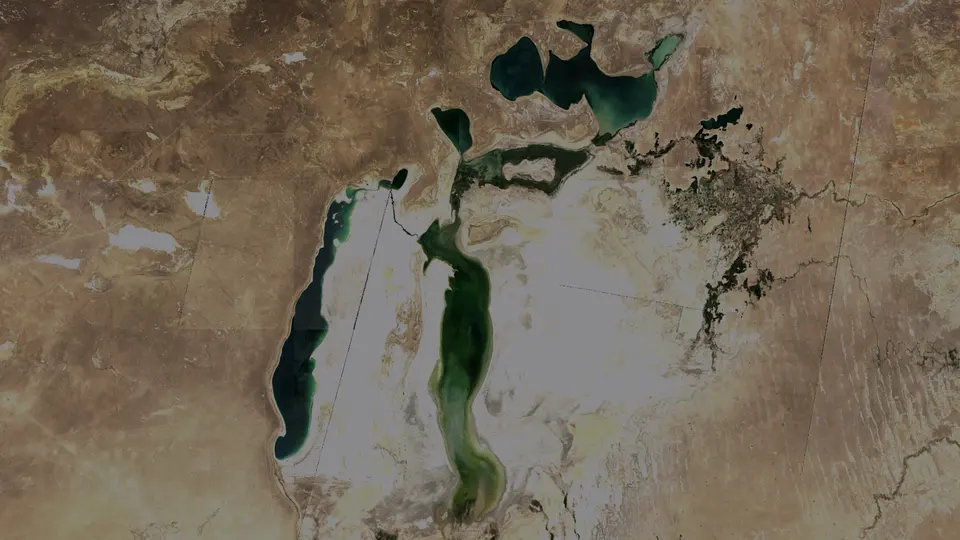
Aral Sea, Kazakhstan and Uzbekistan, 2017 and 2025
Late-summer true-color views from 2017 and 2025 show the North Aral, the western and eastern basins, and the exposed seabed between them.
-
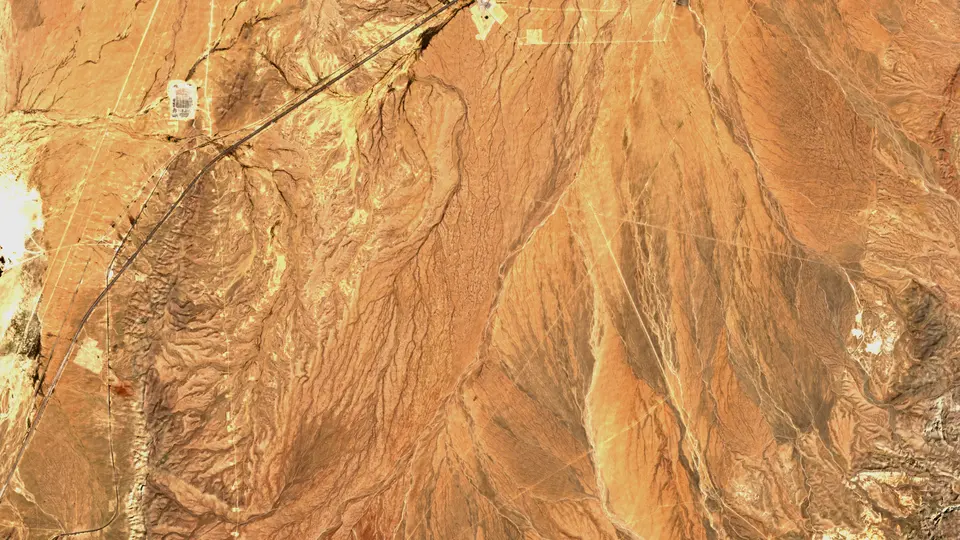
Gemini Solar, Clark County, Nevada, April 2020 and May 2024
The same 20 by 11 km frame in 2020 and 2024 records the construction of a 690-megawatt solar plant on open desert northeast of Las Vegas.
-
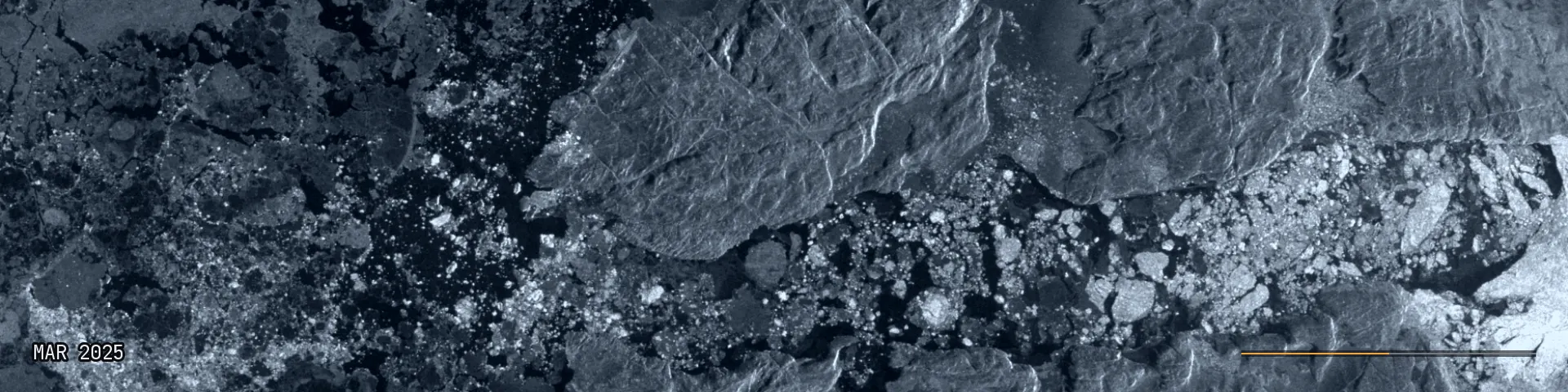
Ilulissat Icefjord and Disko Bay, Greenland, August 2024 to October 2025
Thirty-eight Sentinel-1 passes at a twelve-day interval record icebergs leaving the icefjord, the freeze and break-up of Disko Bay, and the seasonal advance and retreat of sea ice over fifteen months.
-
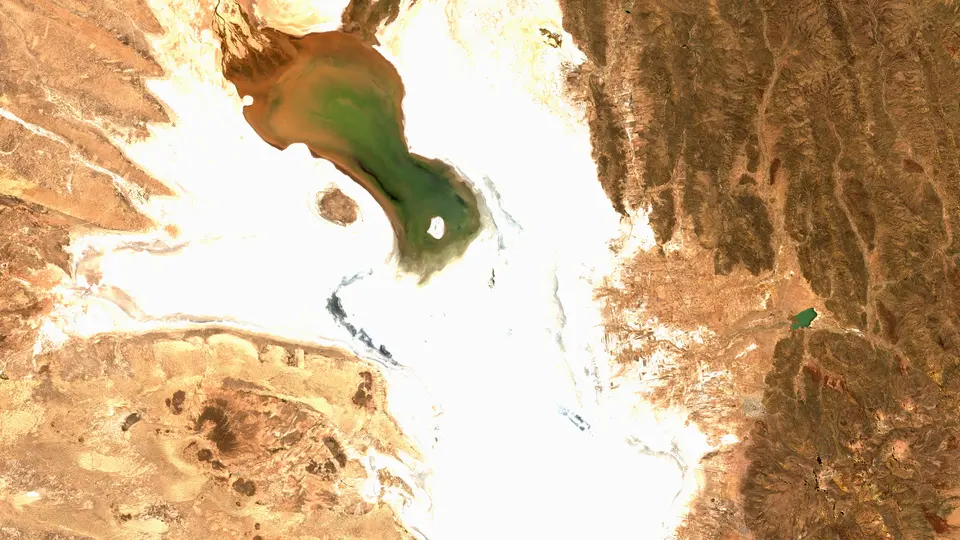
Lake Poopó, Bolivia, August 2017 and August 2025
Late dry-season views of the basin in 2017 and 2025 show the extent of exposed salt and playa relative to open water, and the partial recovery of the lake over eight years.
-
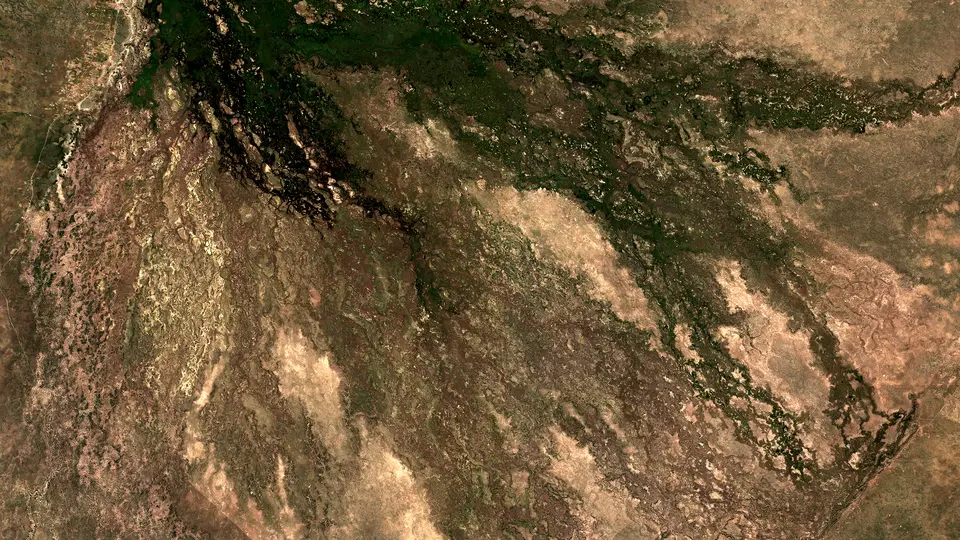
Okavango Delta, Botswana, April and September 2024
Views from April and September 2024 record the delta before and after the annual flood pulse from the Angolan highlands spread through its channels.
-
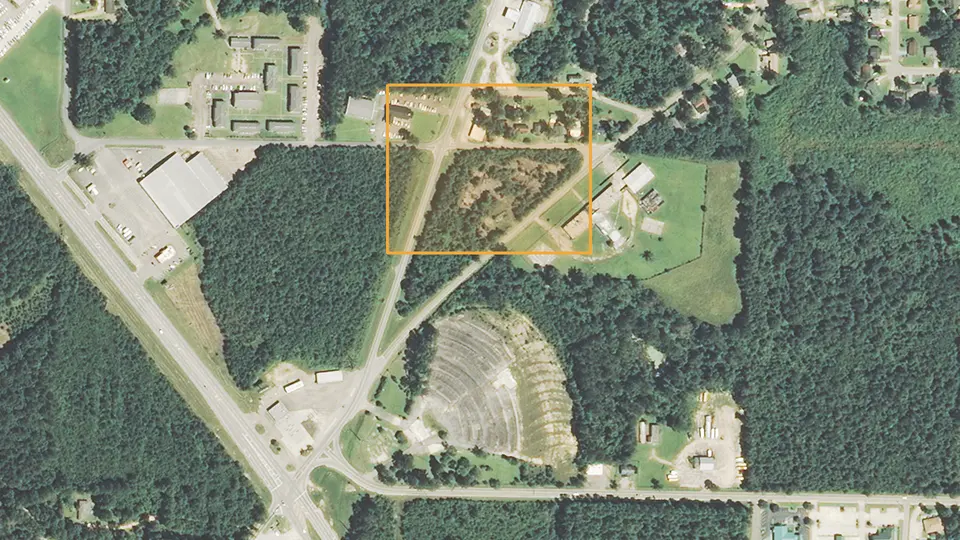
Beverly Drive-In, Hattiesburg, Mississippi, 2012 and 2023
The National Register outline for this listed drive-in lies about 280 meters north of the theater's footprint in aerial imagery. The theater burned in 2010 and an apartment complex now occupies the site, while the listing remains active.
-
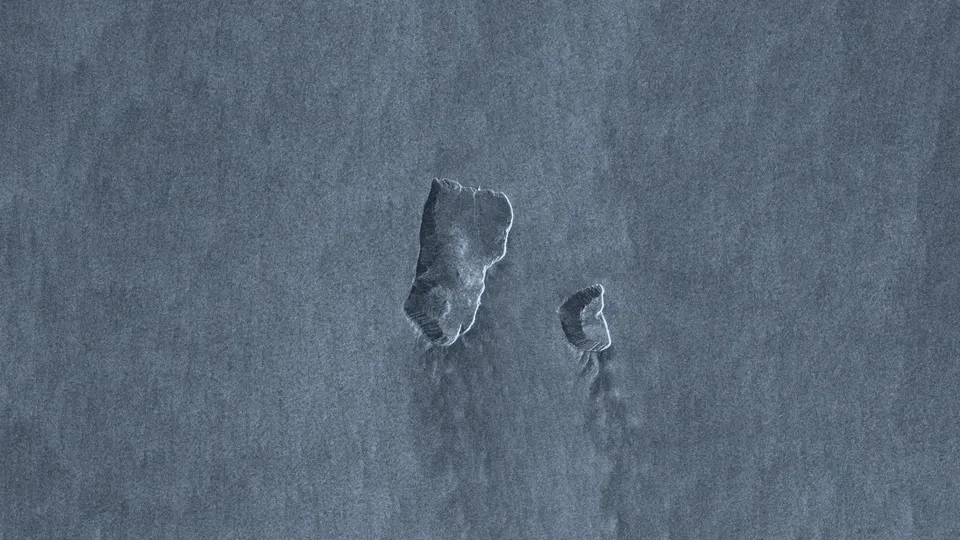
Diomede Islands, Bering Strait, November 2024 and March 2025
Two radar acquisitions of the same 48 by 27 km window, 108 days apart, record the strait's transition from open water in November to fractured pack ice in March.


Every observation carries its scene identifiers and rights. A machine-readable index is at /catalog/observations.geojson; new observations appear in the Observations feed (for feed readers; it shows as plain XML in a browser).